What Makes Childcare Scheduling Different from Other Industries?
Childcare scheduling is unique because the roster is a regulatory compliance document. NQF educator-to-child ratios must be maintained at all times — including during breaks and changeovers — and a roster that allows even a brief ratio breach is not just an operational problem, it's a reportable event. This means childcare rosters must be built ratio-first: coverage is the hard constraint, and everything else (cost management, staff preferences, leave) is secondary.
Childcare services in Australia operate under the National Quality Framework, which sets mandatory educator-to-child ratios that must be maintained continuously. Building rosters that meet these ratios — while managing Award compliance, casual and part-time entitlements, and leave planning — is one of the more technically complex scheduling tasks in any service sector. This guide covers the key requirements and practical approaches.
NQF Ratios: The Non-Negotiable Starting Point
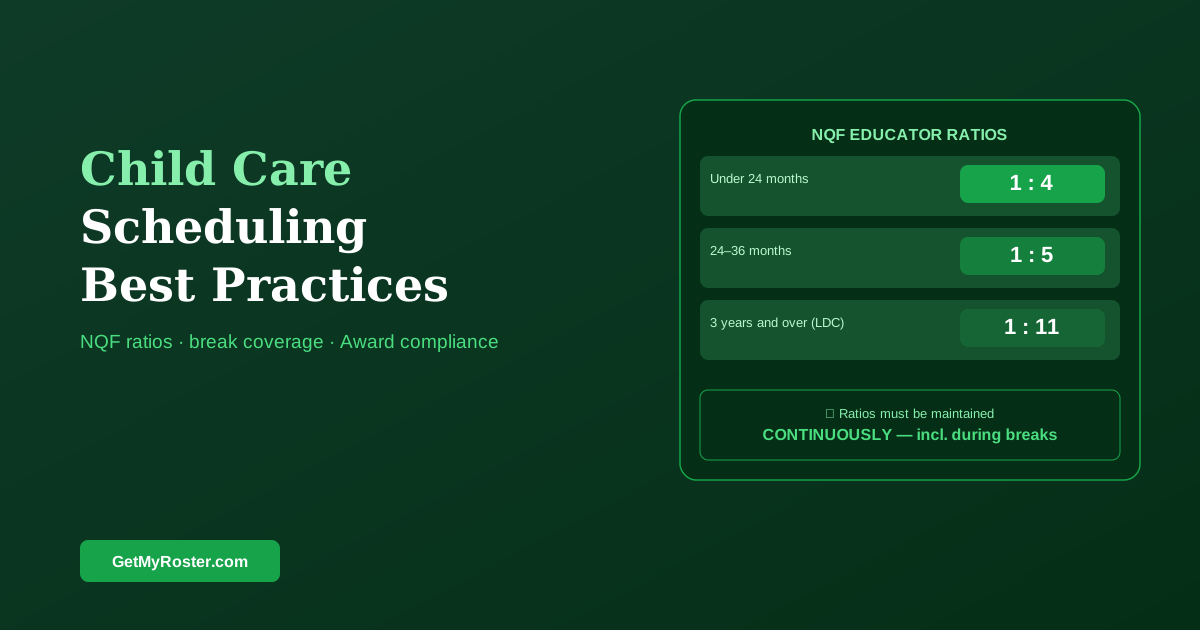
National Quality Framework ratios vary by age group:
- Children under 24 months: 1 educator per 4 children
- Children 24–36 months: 1 educator per 5 children
- Children 3 years and over (long day care): 1 educator per 11 children
- Family day care: 1 educator per 7 children (max 4 under 3)
These ratios must be maintained at all times while children are present — not just on average, but continuously. A ratio breach during a 10-minute window while one educator is on break is still a breach. Build the roster with ratio coverage as the primary constraint, and plan break coverage explicitly, not as an afterthought.
Break Coverage: The Most Overlooked Scheduling Challenge
Staff cannot be counted toward NQF ratios while on a meal break. For a room that is ratio-minimum staffed, this means every break creates a gap that must be covered. Three approaches: staggered breaks (shift start/end times are structured so there is always at least one educator not on break), a designated floater whose role includes ratio cover during breaks, or cross-room coverage where another educator temporarily joins the room during break periods. All three require deliberate roster design — ratio cover during breaks cannot be managed reactively.
Children's Services Award: Key Rostering Provisions
Most childcare educators are covered by the Children's Services Award 2010. Key provisions for rostering: minimum engagement for casuals is 3 hours, casual loading is 25%, Saturday and Sunday attract penalty rates, and split shifts attract an allowance. Degree-qualified teachers may be covered by the Educational Services (Teachers) Award instead — verify each employee's classification and applicable Award before building pay rate templates.
Managing Leave in a Ratio-Constrained Environment
Leave planning in childcare is more constrained than most industries because a single absence can create a ratio breach. A risk-based approach to leave management: maintain a casual pool large enough to cover the typical leave volume for each room, review the casual pool for ratio-qualified educators by room type (not all educators are qualified for all age groups), and require planned leave requests at least 4 weeks in advance for infant rooms. For a compliance-focused overview that covers both childcare and other regulated care settings, see our scheduling law guide.
Frequently Asked Questions
What are the NQF educator-to-child ratios in long day care?
1:4 for children under 24 months, 1:5 for 24–36 months, 1:11 for children 3 years and over. These must be maintained continuously while children are present — including during meal breaks and shift changeovers. A ratio breach at any time is a reportable regulatory event.
How do I maintain NQF ratios during meal breaks?
Staff on meal breaks cannot be counted toward ratios. Options: stagger break times so at least one educator is always on floor, use a designated floater educator to provide ratio cover during break periods, or use cross-room coverage with another qualified educator. Break coverage must be planned in the roster — it cannot be managed reactively.
What Award covers childcare educators?
Most childcare educators are covered by the Children's Services Award 2010, which sets minimum rates by classification (Certificate III through diploma), 25% casual loading, Saturday and Sunday penalty rates, and a 3-hour minimum engagement for casuals. Degree-qualified teachers may instead be covered by the Educational Services (Teachers) Award — verify each employee's classification.
What happens if a childcare service falls below NQF ratios?
Falling below ratios is a serious regulatory breach reportable to the relevant state or territory regulatory authority. Repeated or unaddressed breaches can result in conditions, suspension, or cancellation of operating approval. This makes the roster a compliance document with direct regulatory consequences — not just an operational convenience.
Roster to Ratios, Not Guesswork
GetMyRoster helps childcare services build rosters that maintain NQF ratios throughout every shift, track break coverage automatically, and keep the compliance record the regulatory authorities require.
Start Free Trial