What Are the Key Compliance Requirements for Aged Care Rostering?
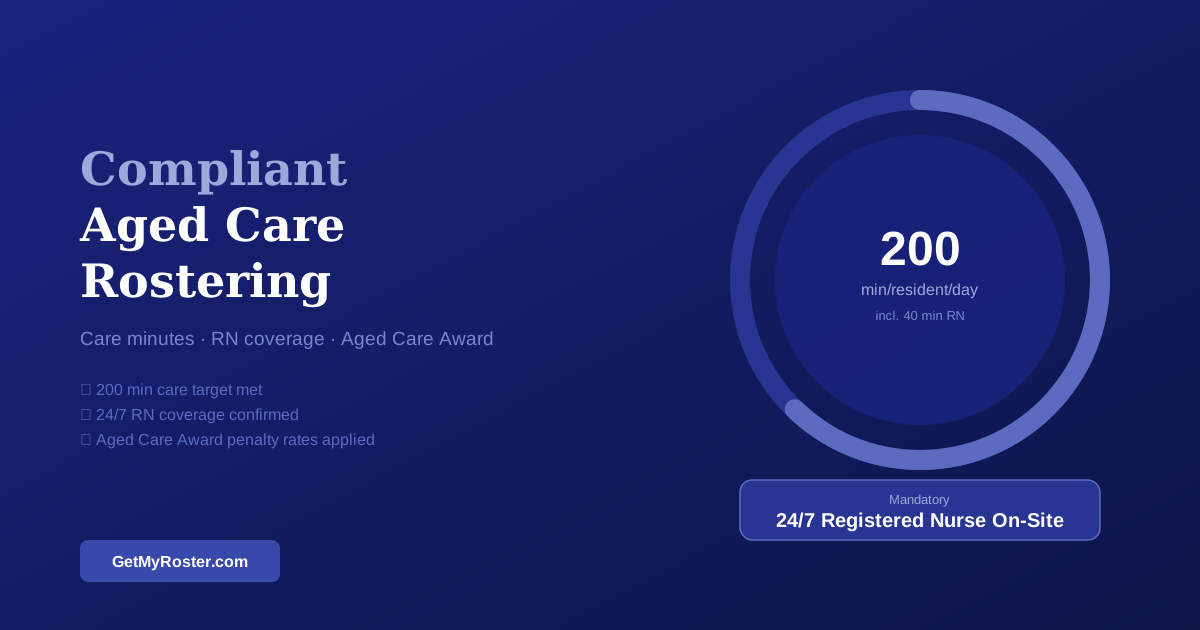
Residential aged care facilities in Australia must meet mandatory care minute targets (200 minutes/resident/day, including 40 minutes RN time), maintain 24/7 Registered Nurse presence, and comply with the Aged Care Award 2010 for all care staff. The roster is a compliance document as much as an operational one — a gap in RN coverage is a reportable event, not just a scheduling inconvenience.
Rostering in aged care is more constrained than almost any other sector. Mandatory care minutes, 24/7 RN requirements, NDIS incident reporting obligations, and a complex Award structure combine to make every roster a compliance exercise as much as an operational one. This guide covers the key requirements and how to build rosters that meet them systematically.
Mandatory Care Minutes: What Providers Must Deliver
Since October 2023, Australian residential aged care providers must deliver an average of 200 care minutes per resident per day, of which at least 40 minutes must be provided by a Registered Nurse. These are facility-wide averages, measured and reported to the Department of Health and Aged Care through the National Aged Care Mandatory Quality Indicator Programme.
The care minute requirement is not a target — it is a minimum. Rosters must be built to guarantee delivery, not to hope for it. This means modelling your required staff hours from resident census data before building shifts, not working backwards from a staff headcount. For practical guidance on patient-safety-oriented scheduling more broadly, also see our healthcare rostering safety guide.
24/7 RN Coverage: Building Your Roster Around It
From 1 July 2023, all residential aged care facilities must have a Registered Nurse on site and on duty at all times. This is the hard constraint around which every other staffing decision is made. Build the RN roster first — filling every gap — before scheduling any other roles.
The practical implication is that your RN casual pool must be large enough and diverse enough in availability to guarantee 24/7 coverage even when planned absences, sick leave, and unplanned vacancies coincide. Model a worst-case scenario: two RNs on planned leave, one sick. Can you still maintain 24/7 cover? If not, your pool is undersized.
Aged Care Award: Key Rostering Provisions
The Aged Care Award 2010 covers personal care workers, nursing assistants, and support staff. Key penalty rates: afternoon shifts attract a loading, night duty attracts a higher loading, Saturday is 150%, Sunday is 175%, and public holidays attract 250% or more depending on classification. Broken shifts (two separate periods in a day) attract a broken shift allowance. Verify rates against the current Award — these figures are subject to Fair Work Commission reviews.
NDIS Service Delivery Rostering
For providers delivering NDIS services alongside residential aged care, the rostering complexity multiplies. NDIS participants have individual support plans that specify the number, timing, and nature of supports to be delivered. The roster must reflect those plans, not generic shift patterns. Staff allocated to NDIS participants must hold the required qualifications and, where applicable, current NDIS Worker Screening clearances. For a case study on overtime reduction in this context, see our aged care case study.
Frequently Asked Questions
What are the mandatory care minute requirements for aged care?
From October 2023, residential aged care facilities must provide an average of 200 minutes of care per resident per day, of which at least 40 minutes must be delivered by a Registered Nurse. These are facility-wide averages measured and reported to the Department of Health and Aged Care.
Does an RN have to be on site 24/7 in residential aged care?
Yes. From 1 July 2023, residential aged care facilities must have a Registered Nurse on site and on duty 24 hours a day, 7 days a week. A gap in RN coverage is a reportable event under the Aged Care Quality and Safety Commission framework. The roster must be built around guaranteed RN coverage before any other shifts are scheduled.
What does the Aged Care Award require for rostering?
The Aged Care Award 2010 sets minimum pay by classification level, penalty rates for afternoon, night, Saturday, Sunday, and public holiday shifts, overtime thresholds, and broken shift allowances. Verify current rates at the Fair Work Commission website — the Award is updated periodically.
How do I handle last-minute RN call-outs in aged care?
You need a documented backfill protocol specifically for clinical coverage, decided in advance: first, contact available casual or bank RN staff; second, contact a pre-approved labour hire provider; third, consider internal overtime as a last resort. Document every backfill attempt whenever a gap risk materialises, for compliance evidence.
Build Compliant Aged Care Rosters with Confidence
GetMyRoster helps aged care managers track care minutes, manage RN coverage, and maintain the compliance records required by the Aged Care Quality and Safety Commission — all in one platform.
Start Free Trial