What Are the Most Common Scheduling Compliance Mistakes in Australia?
The five most common scheduling compliance mistakes are: not paying casual loading (25%) on top of penalty rates, applying incorrect Sunday or public holiday rates, scheduling shifts shorter than the Award's minimum engagement period, inadequate record-keeping of actual hours worked, and not observing minimum rest periods between shifts where the Award requires them. Most of these errors are not deliberate — they happen when managers don't have the Award provisions in front of them when building the roster.
Australian employment law is more specific about scheduling than most managers realise. The National Employment Standards, Modern Awards, and the Fair Work Act together create a detailed framework of minimum entitlements that affect how shifts can be structured, how much notice is required for changes, and what records must be kept. This guide translates the key provisions into practical rostering decisions.
The Casual Loading Trap
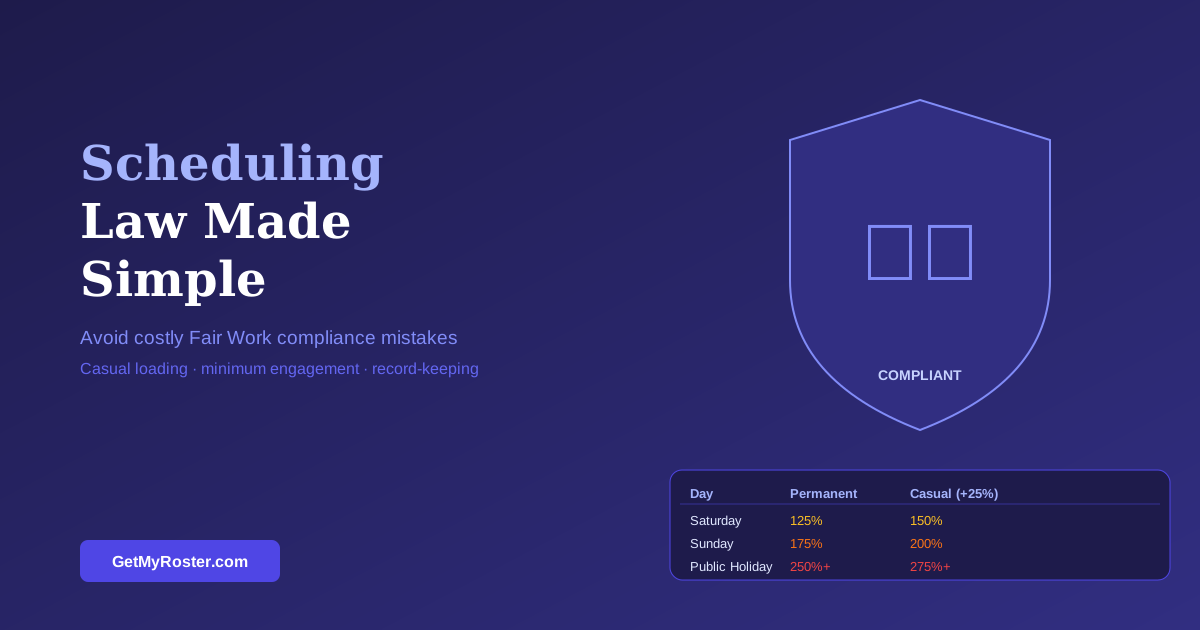
Casual loading (25% under most Modern Awards) is frequently calculated incorrectly. The loading applies to the base rate before penalty rates are applied. On a Sunday, a casual employee doesn't earn their base rate plus 25%, then plus a Sunday rate — the Sunday penalty is calculated on the loaded rate. This means a Sunday rate of 175% for permanent employees typically becomes 200% for casuals. Verify the calculation method in your specific Award — the structure varies between Awards, and this is one of the most common sources of underpayment in Fair Work audits.
Minimum Engagement Periods
Every major Modern Award specifies a minimum number of hours that must be paid for any single engagement. Common minimums: Retail Award (3 hours for casuals), Hospitality Award (2 hours for casuals), Aged Care Award (varies by classification), Restaurant Award (2 hours). Scheduling a 90-minute shift requires payment for the minimum engagement period regardless of the actual hours worked. Short-shift scheduling is one of the most frequent sources of claims to the Fair Work Ombudsman.
Record-Keeping Requirements
Employers must retain employment records for 7 years. The records must include: pay rates applied, actual hours worked (with start and finish times), overtime hours, leave taken and balances, superannuation contributions, and the classification level of each employee. Records must be accessible, in English, and not false or misleading. The practical implication for rostering: paper timesheets are legally adequate, but digital time records with timestamps are far easier to produce on demand and far more defensible under audit.
Shift Change Notice Requirements
Most Awards do not specify a minimum notice period for roster changes, but the Fair Work Act's unfair dismissal and general protections provisions can be engaged if changes are made unreasonably. Some Awards and Enterprise Agreements do have specific notice requirements — check the specific instruments covering your employees. As a practical standard, 48 hours notice for a scheduled change and immediate notification (not same-day) for a cancellation represents defensible practice. For how these requirements apply in specific sectors, see our casual and part-time scheduling guide.
Frequently Asked Questions
What are the most common scheduling compliance mistakes Australian employers make?
The five most common are: not paying casual loading (25%) correctly on penalty rates, applying incorrect Sunday or public holiday rates, scheduling shifts below the minimum engagement period, inadequate records of actual hours worked, and not observing minimum rest periods between shifts where the Award requires them.
What is casual loading and how is it calculated?
Casual loading (25% under most Modern Awards) is added to the base hourly rate. Penalty rates are then applied to the loaded rate — so a casual employee's Sunday pay is calculated as the Sunday rate applied to the already-loaded hourly rate, resulting in a higher absolute dollar amount than a permanent employee on the same Sunday rate. Verify the specific calculation method in your Award.
What records do I need to keep for Fair Work compliance?
Employers must keep employment records for 7 years covering: pay rates, hours worked (including start and finish times), overtime, leave taken and balances, superannuation contributions, and classification levels. Records must be in English, accessible for inspection, and not false or misleading. Digital records with timestamps are significantly easier to produce on demand than paper timesheets.
What is the NES and how does it affect rostering?
The National Employment Standards set 11 minimum entitlements that cannot be contracted away. The most relevant to rostering are: maximum 38 ordinary weekly hours (plus reasonable additional hours), the right to request flexible working arrangements (which may affect availability), and consultation requirements before significant roster changes. NES provisions apply regardless of Award or Enterprise Agreement terms.
Build Rosters That Are Compliant by Design, Not by Luck
GetMyRoster includes Award interpretation for Australian Modern Awards — automatically applying the correct rates and flagging minimum engagement and rest period issues before you publish the roster.
Start Free Trial