What Is the Key Difference Between Casual and Part-Time in Scheduling?
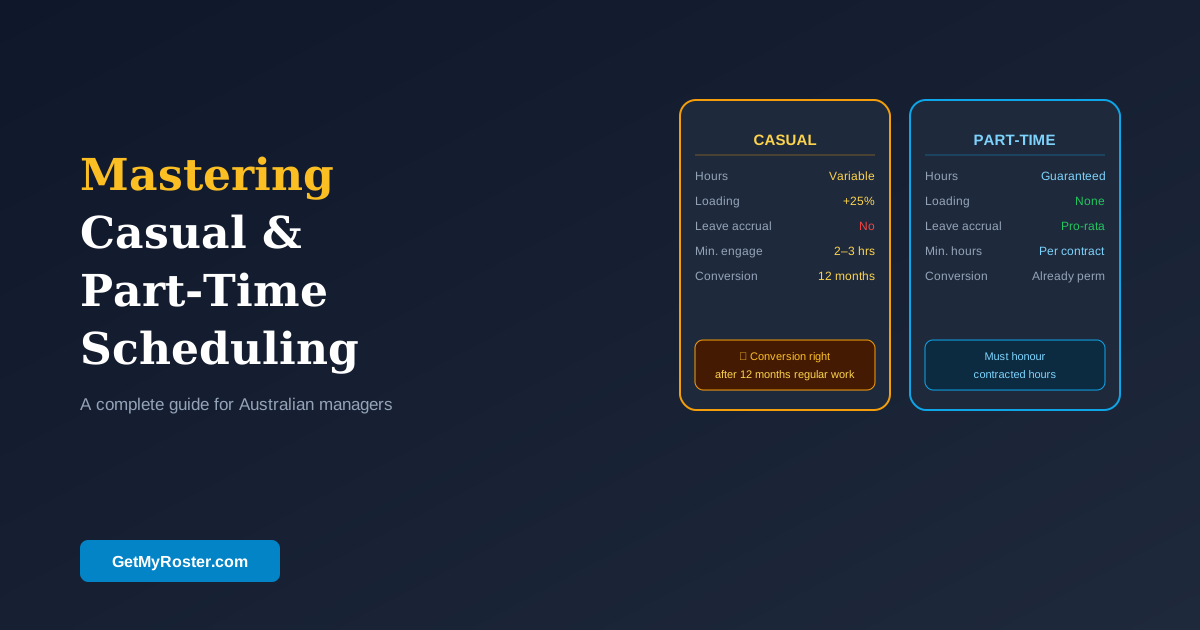
Part-time employees have guaranteed hours set in their contract and accrue leave entitlements — their roster must honour that guarantee. Casual employees have no guaranteed hours, are paid 25% loading in lieu of leave, and can receive varying hours each week. The complication is that after 12 months of regular and systematic work, casuals may have the right to request conversion to permanent employment — which changes how you can manage their hours.
Managing a mixed workforce of casual and part-time staff is the rostering reality for most Australian businesses in retail, hospitality, aged care, and healthcare. Getting the mechanics right — correct rates, guaranteed hours compliance, casual conversion eligibility — protects the business and builds the kind of scheduling reliability that improves retention. This guide covers the key distinctions and practical management approaches.
Part-Time Employees: The Guaranteed Hours Obligation
Part-time employees have a contracted number of guaranteed hours. Scheduling them consistently below that guarantee is a potential breach of contract and, depending on the Award, may trigger additional entitlements. Before reducing a part-timer's hours in a given week, check whether their contract specifies a guaranteed minimum — and if it does, either honour it or discuss a formal variation with the employee. Ad hoc reductions that happen to be convenient in a quiet week can create a claim of breach of contract over time.
Casual Employees: The Conversion Right and Its Implications
After 12 months of regular and systematic employment, a casual employee may request conversion to permanent part-time or full-time status. Employers can decline on reasonable grounds (such as genuine irregularity of demand) but must do so in writing. The obligation to offer conversion is increasingly enforced: the Fair Work Ombudsman has made casual conversion a focus area, and failure to offer the opportunity to eligible employees is a compliance risk.
Practically, this means you should track when casuals pass the 12-month mark and review whether their pattern of work meets the "regular and systematic" test. If it does, initiate the conversion conversation — don't wait for the employee to do so. For the broader compliance framework that governs these obligations, see our scheduling law guide.
Rostering a Mixed Workforce: Practical Approaches
Structure your availability collection to explicitly separate guaranteed hours (for part-timers) from preferred availability (for casuals). When building the roster, fill guaranteed part-time shifts first — these are fixed obligations. Build casual shifts around the remaining coverage requirements and available demand. This prevents the common mistake of inadvertently treating a part-timer's contracted hours as optional in a quiet week.
The Same Hours, Different Costs
A casual and a part-time employee working the same shift on Sunday are paid differently. The part-timer earns the Sunday rate applied to their base rate. The casual earns the same Sunday rate applied to their loaded base rate (base + 25% casual loading). The casual's absolute cost per hour is therefore higher. Factor this into your labour cost projections when deciding the casual-to-permanent ratio that makes sense for your business. For the sector-specific approach to this in shift planning, see our shift planning for casual and part-time employees guide.
Frequently Asked Questions
What is the difference between casual and part-time in Australia?
Part-time employees have guaranteed contracted hours and accrue leave on a pro-rata basis. Casual employees have no guaranteed hours and are paid 25% casual loading in lieu of leave entitlements. After 12 months of regular and systematic work, casuals may have the right to request conversion to permanent employment.
What is the casual conversion right?
Under the Fair Work Act, casual employees who have worked for 12 months with a regular and systematic pattern of hours may request conversion to permanent employment. Employers can decline on reasonable grounds but must do so in writing. The Fair Work Ombudsman actively enforces this obligation — failure to offer conversion to eligible casuals is a compliance risk.
Can I offer fewer hours to a casual than the week before?
Yes — casual employment involves no guaranteed hours by definition. However, significantly reducing a long-tenure casual's hours may trigger scrutiny of whether they have regular and systematic employment and should be offered conversion. Seek advice before substantially reducing hours for a casual who has worked regularly for 12 or more months.
How do I manage a mixed casual and part-time workforce without compliance issues?
Apply correct rates for each type (loaded rate for casuals, unloaded rate with leave accrual for part-timers), honour guaranteed hours for part-timers, monitor casual conversion eligibility at the 12-month mark, and maintain separate records for each employment type. Build the roster by filling part-time guaranteed shifts first, then filling remaining coverage with casuals.
Manage Casuals and Part-Timers with Confidence
GetMyRoster applies the correct rates for each employment type automatically, tracks casual tenure for conversion eligibility, and ensures guaranteed part-time hours are respected in every roster you build.
Start Free Trial