What Is the Hardest Part of Scheduling a Mostly Casual Workforce?
Availability management. Unlike full-time staff with a fixed schedule, casual employees' available times change week to week — and chasing availability through individual messages is the single biggest time drain in casual workforce scheduling. Shift planning software solves this by giving casuals a self-service availability portal, so the manager sees a list of who's available for each shift rather than spending hours finding out.
Businesses that rely heavily on casual and part-time staff face a scheduling challenge that doesn't exist with a full-time workforce: availability is variable, guaranteed hours must be tracked separately from offered hours, and compliance obligations (casual loading, minimum engagement, conversion rights) vary by employment type. Shift planning software is built specifically to manage this complexity. This guide covers how.
Availability Management: The Core Problem
A manual availability collection process for 15 casual employees looks like this: the manager contacts each employee (message, call, or in person) to ask about next week's availability, waits for responses, chases the non-respondents, manually maps the responses against the coverage requirements, and builds the roster from the overlap. For 15 casuals, this can take 2–3 hours per week — every week.
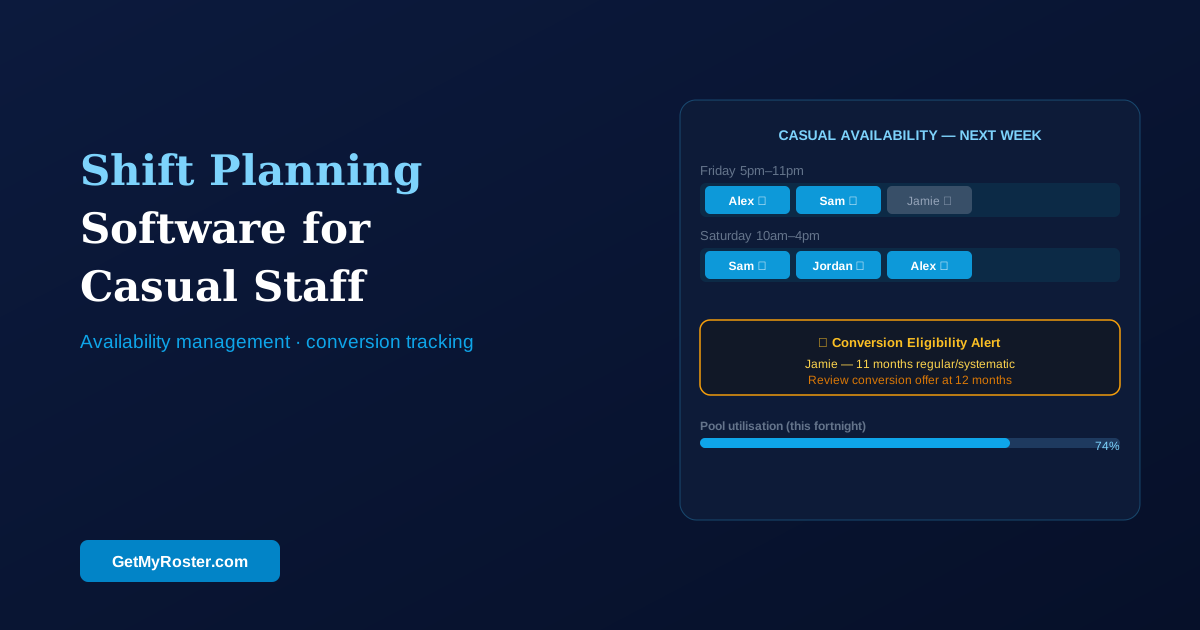
Shift planning software replaces this with a self-service availability portal. Casual employees submit their availability for the upcoming week (or fortnight) through an app. The manager opens the roster builder and sees, for each shift slot, a filtered list of available employees. The availability collection is asynchronous and requires no manager time beyond reviewing the results. This single change typically saves 1.5–2 hours per week for managers with predominantly casual teams.
Tracking Guaranteed Hours for Part-Time Employees
Part-time employees have contracted guaranteed hours that must be honoured. In a manual system, tracking whether each part-timer's guaranteed hours are being met requires reviewing individual schedules against their contracts — a task that rarely happens as regularly as it should. Scheduling software that records guaranteed hours as a parameter for each part-time employee and flags deviations prevents inadvertent contract breaches. For the broader compliance context around these obligations, see our casual and part-time scheduling compliance guide.
Casual Conversion Tracking
The right to request conversion to permanent employment after 12 months of regular and systematic work is a known compliance gap for many businesses. Scheduling software that records each casual employee's start date and tracks their hours pattern can alert the manager when an employee is approaching the 12-month threshold — giving time to proactively manage the conversation, rather than being caught unprepared.
Equitable Shift Distribution for Casuals
Over-reliance on a small number of high-availability casuals creates the most common casual workforce risk: when those employees are unavailable, there is no effective backup. Shift planning software that shows shift distribution across the casual pool allows managers to identify and correct imbalances — ensuring all casuals receive comparable hours and remain engaged and available. For the related labour cost management dimension, see our guide on 5 roster hacks for managers.
Frequently Asked Questions
Why is scheduling casual and part-time employees more complex than full-timers?
Variable availability, different hours each fortnight, correct pay rate classifications per type, guaranteed hours obligations for part-timers, and conversion eligibility tracking at 12 months all add complexity that doesn't exist with a fixed full-time roster. Managing this manually for more than 5–6 casuals becomes error-prone.
How does shift planning software handle casual availability?
Casuals submit their available times through a self-service app portal. When building the roster, the manager sees a filtered list of available employees for each shift slot — eliminating the need to contact each employee individually to check availability. This typically saves 1.5–2 hours per week for managers with predominantly casual teams.
Can shift planning software help prevent casual conversion disputes?
Yes. Software that tracks casual tenure and hours patterns can flag when an employee approaches the 12-month regular and systematic threshold, giving the manager time to proactively initiate the conversion conversation. It also provides a documented record of the hours pattern in any subsequent dispute about conversion eligibility.
What is the biggest scheduling risk with a mostly casual workforce?
Over-reliance on a small number of highly available casuals. When those employees are unavailable, the coverage model collapses — resulting in overtime, scrambling, or understaffing. A healthy casual pool requires active management: equitable shift distribution and a pool large enough that no single absence creates a crisis.
Stop Chasing Availability. Let Casuals Tell You When They're Free.
GetMyRoster's self-service availability portal means your casual team submits their availability — you just select from who's free. Conversion tracking, guaranteed hours alerts, and payroll integration included.
Start Free Trial