What Is Staff Rostering?
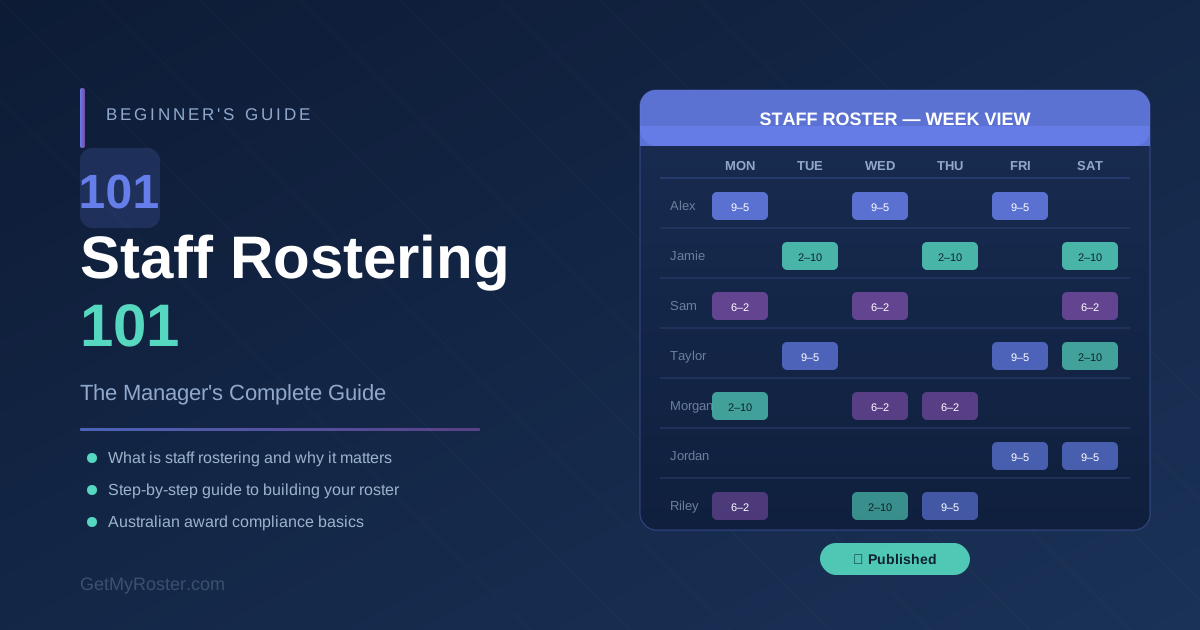
Staff rostering is the process of planning and assigning work shifts to employees based on business demand, staff availability, skills, and legal obligations. A well-built roster ensures the right people are in the right place at the right time — without overspending on labour or burning out your team.
Whether you are building your first staff roster or trying to fix a process that has become a weekly headache, this guide covers everything you need to know: what makes a roster effective, how to build one step by step, common mistakes to avoid, Australian compliance basics, and when it makes sense to move from spreadsheets to dedicated software.
Why Good Rostering Matters More Than Most Managers Realise
A well-built roster is one of the most powerful operational levers available to a manager. It directly determines:
- Labour costs — the largest controllable expense in most service businesses, typically 15–40% of revenue
- Staff satisfaction and retention — poor scheduling is a leading driver of employee turnover in shift-based industries
- Service quality — being under or overstaffed directly affects the customer experience in real time
- Legal compliance — rosters must respect Modern Award conditions, maximum hours, minimum rest periods, and Fair Work obligations
A poor roster creates problems across all four areas simultaneously. A strong roster saves money, keeps your team engaged, protects you legally, and makes your operation easier to run from week to week.
Step 1: Understand Your Staffing Requirements Before You Build Anything
A common mistake is jumping straight to "who is available?" before clearly establishing what the roster actually needs to achieve. Start with requirements, not names.
Operating Hours and Service Demand Patterns
What hours does your business operate? Which periods are consistently high-demand, and which are quiet? Are there weekly, seasonal, or event-driven patterns that should shape your staffing levels across the period?
Minimum Coverage Requirements
What is the minimum number of staff required to operate safely and effectively at each point in the day? In regulated industries — childcare, aged care, healthcare — minimum staff-to-client or staff-to-patient ratios may be set by law. In hospitality and retail, minimums are typically determined by operational need and agreed service standards.
Role and Skill Requirements Per Shift
Which specific roles need to be filled at any given time? Which staff are trained and qualified to fill each role? Are there dependencies — for example, that at least one senior or licensed staff member must be present at all times for safety or compliance reasons?
Step 2: Collect and Record Staff Availability Properly
Your roster can only work if it reflects what your team is actually available to work. That means collecting availability in a consistent, documented format — not via text messages, verbal requests, or sticky notes that disappear under pressure.
Key availability information to collect for each staff member:
- Days and hours they are available to work each week
- Standing commitments — study, childcare, a second job, regular medical appointments
- Any upcoming leave requests or known unavailability in the roster period
- For casuals and part-timers: preferred hours per week and minimum hours they need to maintain
Set a clear availability submission deadline — for example, one week before the start of the roster period. This gives you enough lead time to incorporate preferences into the roster without last-minute submissions causing the whole plan to unravel.
Step 3: Build the Roster in the Right Order
Experienced managers follow a specific sequence when building rosters. Skipping steps or doing them out of order typically means significant rework and a roster that does not hold together well under the week's pressure.
- Lock in fixed requirements first — compliance minimums, recurring operational commitments, management shifts that do not change week to week
- Add permanent full-time staff — based on contracted hours and their standard working patterns
- Cover peak demand periods next — add part-time and casual staff to your highest-demand windows before filling in quieter periods
- Fill off-peak periods — with the minimum coverage the business actually requires, not habit-based staffing from previous rosters
- Check for compliance issues — availability violations, consecutive day limits, minimum rest period breaches, overtime triggers
- Calculate and review labour cost estimate — compare total estimated cost against your weekly labour target before publishing
- Publish — with as much advance notice as possible
Step 4: Communicate the Roster Clearly and on Time
A roster that staff cannot easily access or understand creates confusion, no-shows, and frustration. Once built, your roster needs to be:
- Published in advance — minimum one week before the first shift begins; two weeks is the industry best practice and increasingly an award obligation in some industries
- Accessible to all staff — not just pinned on a noticeboard; ideally through a platform or app where staff can view their own shifts from anywhere at any time
- Accompanied by a notification — staff should be actively informed when a new roster is published, not expected to check manually on the off-chance
Understanding Australian Award and Compliance Requirements
In Australia, rosters must comply with Fair Work Act provisions and any applicable Modern Award or Enterprise Agreement that covers your workforce. Requirements vary significantly by industry and award, but common obligations include:
| Requirement | Typical Obligation | Important Note |
|---|---|---|
| Roster change notice | Often 7 days under many Modern Awards | Short-notice changes may attract additional pay obligations — check your Award |
| Minimum shift length (casuals) | Typically 2–3 hours minimum engagement | Varies significantly by industry and award — never assume |
| Rest between shifts | Minimum 8–12 hours between consecutive shifts | Safety-critical industries (healthcare, transport) may require more |
| Maximum ordinary hours | 38 hours per week for full-time employees | Overtime rates apply above this; part-time contracts may have lower thresholds |
| Penalty rates | Higher rates apply for evenings, weekends, public holidays | Specific rates are set in your applicable Award — factor these into labour cost calculations |
Always verify the specific Modern Award that covers your workforce. The Fair Work Ombudsman website (fairwork.gov.au) provides industry-specific Award summaries and a free Pay and Conditions Tool. When in doubt, seek HR or employment law advice rather than assuming — Award breaches can result in significant back-pay obligations and civil penalties.
Which Type of Roster Is Right for Your Business?
Different businesses and industries suit different rostering models. The three most common approaches are:
| Roster Type | How It Works | Best For | Watch Out For |
|---|---|---|---|
| Fixed roster | Same shift pattern every week — same staff, same days, same times | Office environments, roles with stable demand, staff who value maximum predictability | Inflexible to demand changes; covering absences typically requires overtime or agency staff |
| Rotating roster | Staff cycle through different shift patterns on a set schedule (e.g., AM → PM → night each week or month) | 24/7 operations — hospitals, factories, transport, security — where all shift types need fair distribution | Can disrupt sleep patterns and work-life balance; complex to communicate clearly without digital tools |
| Flexible / demand-based roster | Built weekly or fortnightly to match forecast demand; casuals and part-timers fill variable needs | Hospitality, retail, aged care, events — businesses where demand varies significantly by day and time | Requires reliable demand data and a well-maintained casual pool; more manager time to build each period |
The 5 Most Common Rostering Mistakes
| # | Mistake | The Operational Impact | The Fix |
|---|---|---|---|
| 1 | Copying last week's roster without reviewing demand data | Structural overstaffing that compounds quietly over months | Start each roster from a fresh demand analysis — not last week's template |
| 2 | Publishing with only 2–3 days' notice | Staff can't plan their lives; trust erodes; turnover increases | Set a non-negotiable roster publication day each week and hold to it |
| 3 | No formal availability collection process | Availability conflicts, last-minute calls, staff frustration that escalates | Formalise availability collection with a documented deadline and format |
| 4 | No call-out coverage plan | Overtime becomes the automatic solution for every gap shift | Build and actively maintain a reliable casual coverage pool |
| 5 | Not tracking actual labour cost against a weekly target | Overspend is discovered at month-end — too late to correct | Review estimated labour cost before publishing each roster |
Rostering Tools: When to Move Beyond the Spreadsheet
Many businesses start with spreadsheets or paper rosters — and for a very small team with stable hours, that can work. But there is a clear inflection point where the time cost and error risk of manual rostering outweigh any tool savings:
- You have more than 5–6 staff to schedule across different roles or shift types
- You are managing multiple sites, skill requirements, or complex availability patterns
- Staff are regularly contacting you about shift questions, changes, or conflicts
- You are spending more than 2 hours per week building and updating the roster
- You need to track labour cost against a budget target in anything close to real time
- Leave management, availability collection, and compliance checking are all happening in separate places — or not happening at all
Build Your First Proper Roster in Minutes
Get My Roster makes it easy to set up your team, collect availability, build compliant rosters, and notify staff — all without the spreadsheet chaos. Start free, no credit card required.
Get Started FreeFrequently Asked Questions About Staff Rostering
What is a staff roster?
A staff roster is a schedule that assigns specific work shifts to employees for a defined period — typically a week or fortnight. It specifies who works, when they work, and where. A good roster is built around business demand, staff availability, role requirements, and compliance obligations — not just habit or who is available.
How far in advance should I publish a roster?
Best practice is two weeks in advance. At minimum, one full week before the first shift begins. Under many Modern Awards in Australia, insufficient notice for roster changes can trigger additional pay obligations — so publishing early protects you both operationally and legally.
What is the difference between a roster and a schedule?
"Roster" and "schedule" are used interchangeably in Australian workplaces. "Roster" is the standard Australian English term; "schedule" is more common in American English contexts. Both refer to the document or system that assigns work periods to employees. In Fair Work documentation, you will typically see "roster" used.
How do I handle last-minute staff call-outs?
Have a documented call-out process in place before you need it. This should include a prioritised list of casual or part-time staff who can be contacted, a maximum response window (e.g., 30 minutes before moving to the next person), and a clear protocol for what happens if no casual is available — who can authorise overtime, whether reduced staffing is operationally acceptable, or whether a neighbouring team member can be called across. The call-out plan should exist as a written document, not just in the manager's head.
What are the legal requirements for rostering in Australia?
Rostering obligations vary significantly by Modern Award, enterprise agreement, and employment type. Common requirements include minimum notice periods for roster changes, minimum engagement lengths for casual employees, minimum rest periods between consecutive shifts, and maximum ordinary hours before overtime rates apply. Always verify the specific Award that covers your workforce. The Fair Work Ombudsman website (fairwork.gov.au) has industry-specific Award guides and a free Pay and Conditions Tool that is regularly updated.
How do I calculate whether my roster is within labour cost budget?
Multiply each employee's scheduled hours by their applicable hourly rate — including penalty rates for evenings, weekends, and public holidays under their Award. Sum this across the full roster period and divide by your forecast revenue to get your estimated labour cost percentage. If this is tracking over your target before you publish, adjust shifts to bring it back in line. Dedicated rostering software can automate this calculation in real time as you build, which significantly reduces the chance of publishing a roster that blows the budget before the week has even started.