Why Is Healthcare Rostering Different from Other Sector Scheduling?
Healthcare rostering is scheduling with patient safety implications. A gap in clinical skill mix isn't just an operational inconvenience — it's a risk factor for adverse events. Fatigue from poorly structured shift patterns is independently associated with increased error rates. Rostering in healthcare must balance Award and Enterprise Agreement compliance, clinical skill mix requirements, fatigue management, and patient continuity of care simultaneously — a more complex problem than almost any other scheduling context.
Healthcare managers who build rosters are simultaneously managing clinical risk. The combination of skill mix requirements, rest period provisions, mandatory qualifications, and patient continuity obligations makes healthcare scheduling one of the most constrained and highest-stakes rostering tasks in any industry. This guide covers the core principles of safe, compliant healthcare rostering in the Australian context.
Skill Mix: The First Constraint
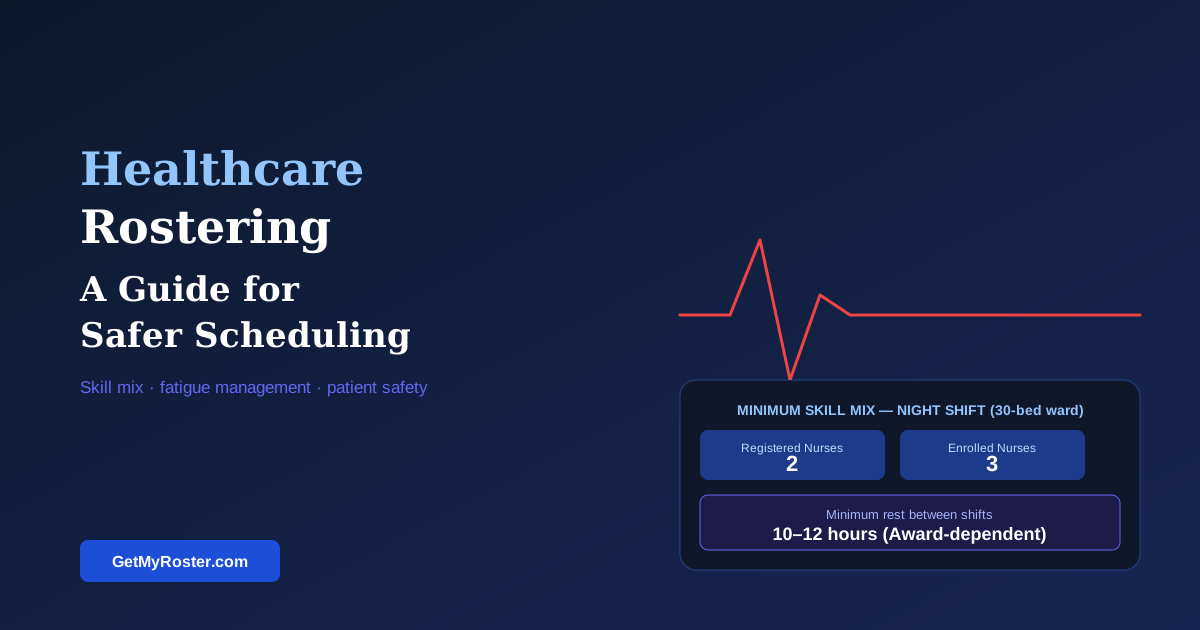
Before any other scheduling decisions are made, establish the minimum clinical skill mix for each shift in each ward or clinical area. Expressed as a ratio or minimum count by classification (e.g., minimum 2 Registered Nurses and 3 Enrolled Nurses for a 30-bed general ward on a night shift), skill mix requirements should be documented, reviewed by a Clinical Nurse Consultant or NUM, and embedded as a hard constraint in the roster-building process.
Attempting to backfill a skill mix gap with a less-qualified staff member — rostering an Enrolled Nurse to cover a shift that requires a Registered Nurse, for example — is not just a compliance issue; it's a clinical governance issue with direct liability implications. For an evidence-based approach to connecting rostering to patient outcomes, the Australian College of Nursing's safe staffing resources provide useful guidance.
Fatigue Management in Shift Pattern Design
The research on healthcare worker fatigue and patient safety is unambiguous: extended shifts, consecutive night shifts without adequate recovery, and short inter-shift rest periods all increase error rates and adverse event frequency. Roster patterns that create these conditions are clinical risk factors.
Handover and Continuity of Care
Frequent staff rotations increase handover frequency, and each handover is a potential point of clinical information loss. Roster design that promotes continuity — consistent shift teams, primary nursing assignments where possible, structured handover periods built into shift overlap — reduces this risk. This is particularly important in high-dependency areas where patient status changes rapidly and information currency is critical.
Mandatory Training, Credentialling, and BLS Currency
Healthcare roster management includes tracking mandatory training currency — Basic Life Support, mandatory reporting obligations, infection control, equipment competencies. Staff who are not current in mandatory training may not be able to work in all clinical areas, creating a hidden scheduling constraint. A roster system that tracks credential expiry dates and flags upcoming gaps prevents the operational crisis of discovering an expired certification on the day of a shift. For the aged care-specific version of this problem, see our aged care compliance guide.
Frequently Asked Questions
How does rostering affect patient safety?
Through three mechanisms: clinical skill mix (correct qualifications on each shift for patient acuity), fatigue management (consecutive nights and short rest periods increase error rates), and continuity of care (frequent handovers between unfamiliar staff increase missed information risk). Safe rostering is clinical risk management, not just workforce administration.
What is safe staffing in the Australian healthcare context?
Safe staffing means maintaining sufficient numbers and skill mix of clinical staff to deliver safe care. In some Australian states, public hospital staffing is governed by mandated nurse-to-patient ratios legislation (Victoria, Queensland, NSW). For settings without mandated ratios, clinical specialty bodies publish recommended staffing guidelines by acuity and patient type.
What rest period requirements apply to healthcare workers in Australia?
Rest period requirements vary by Award and Enterprise Agreement — the Nurses Award 2020 and most healthcare EAs specify minimum inter-shift rest periods (commonly 10–12 hours). Scheduling consecutive shifts that breach this minimum is a compliance risk and a documented patient safety risk. The roster manager carries the obligation, not the individual staff member.
How do I manage clinical skill mix in a healthcare roster?
Document the minimum qualification requirements for each shift in each clinical area as a hard constraint in the roster. Build each shift to meet those minimums before adding discretionary staff. When sick leave creates a skill mix gap, the backfill must be qualified for the role — not just any available staff member. This is a clinical governance obligation, not just an operational preference.
Healthcare Rostering That Keeps Skill Mix and Compliance in View
GetMyRoster helps healthcare managers track clinical skill mix requirements, credential expiry, and mandatory rest periods — building a roster that is safe for patients and compliant for the organisation.
Start Free Trial