What Are the Key Roster Trends Shaping Workforce Scheduling in 2026?
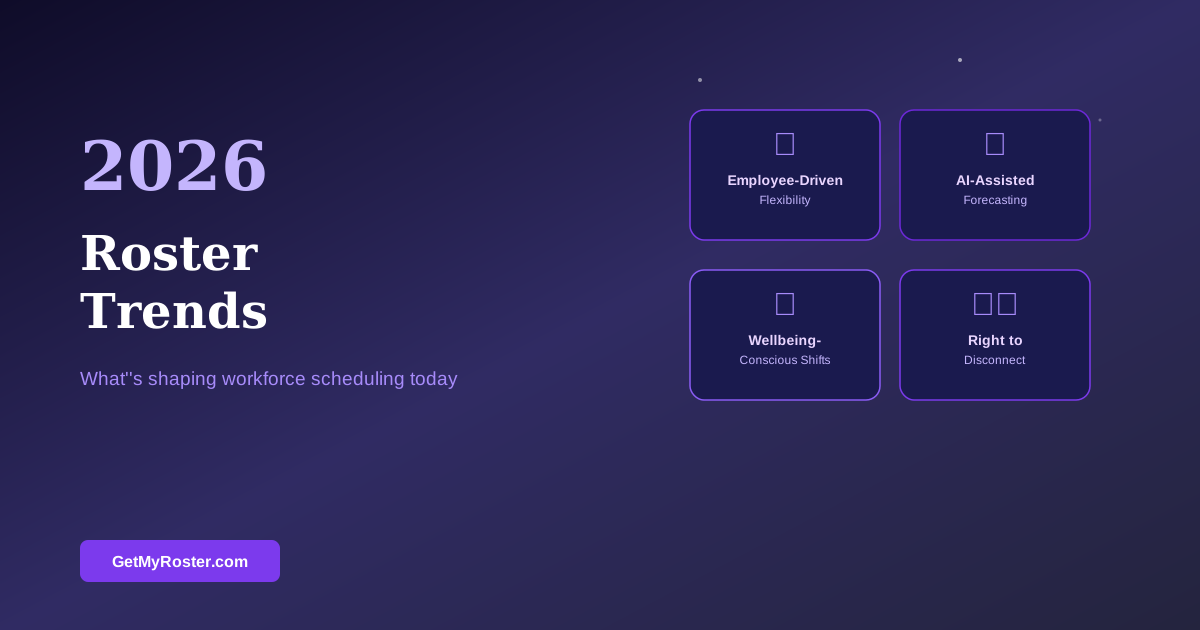
Three trends are reshaping scheduling in 2026: employee-driven flexibility (staff expect app-based availability management and swap requests as standard), AI-assisted demand forecasting (software increasingly suggests staffing levels rather than requiring managers to calculate them manually), and wellbeing-conscious scheduling (rostering decisions now need to account for fatigue, predictability, and work-life balance as explicit inputs, not afterthoughts).
Workforce scheduling has changed more in the last five years than in the preceding two decades. The combination of post-COVID expectations, new legislation (including right-to-disconnect provisions), and increasingly accessible AI tools has shifted both employee expectations and operational best practice. Here is what's defining scheduling in 2026 and what it means for managers building rosters today.
Trend 1: Employee-Driven Flexibility as a Baseline Expectation
The pandemic normalised remote work for office roles and schedule flexibility for shift-based roles. Three years on, employees in hospitality, retail, aged care, and healthcare now expect to be able to set their availability through an app, see their roster on their phone as soon as it's published, and request swaps without going through a manager every step of the way.
This isn't a "nice to have" any more. Businesses still using WhatsApp groups and physical whiteboards are losing candidates to competitors who advertise app-based scheduling as part of the role. For the practical case for making the switch, see our guide on why small businesses should automate scheduling.
Trend 2: AI-Assisted Demand Forecasting and Scheduling Suggestions
AI is increasingly built into scheduling platforms as a forecasting and recommendation layer. Rather than requiring managers to manually compare transaction data to roster patterns, AI tools analyse historical demand, apply seasonal adjustments, and surface staffing recommendations when the roster builder opens. The manager still makes final decisions — the AI eliminates the analysis step, not the judgment.
Current AI scheduling capabilities in small-to-medium business platforms include: demand-based shift suggestions, automatic overtime and penalty rate alerts, pattern analysis for no-shows and availability conflicts, and predictive coverage gap identification. Fully autonomous AI scheduling (where the system publishes rosters without manager approval) remains uncommon and inadvisable for compliance reasons.
Trend 3: Wellbeing-Conscious Scheduling
The relationship between scheduling practices and employee wellbeing is now well-documented and increasingly referenced in Employment Law. Excessive overtime, chronically unpredictable hours, insufficient rest between shifts, and last-minute schedule changes are recognised as work health and safety risk factors — not just inconveniences.
What These Trends Mean for Your Rostering Practice
For most managers, 2026 is a year to audit whether your current scheduling practices reflect what employees expect and what the law now requires. The checklist: Do staff receive rosters with 14 days notice? Can they set availability and request swaps through an app? Are your shift patterns designed to protect rest periods? Do your records hold up to a Fair Work audit? For a practical guide to data-driven roster improvement, see our 7-step schedule optimisation guide.
Frequently Asked Questions
What is the biggest scheduling shift in 2026?
The normalisation of employee-driven flexibility. Staff now expect app-based availability management, roster access on their phone, and self-service swap requests as a baseline — not a perk. Employers still using whiteboards and group chats are at a competitive disadvantage in recruitment and retention.
How is AI being used in staff scheduling?
AI in scheduling currently operates as a demand forecasting and suggestion engine — analysing historical trading data to recommend staffing levels, flagging compliance issues in draft rosters, and identifying patterns in no-shows. Fully automated AI scheduling without manager oversight is not yet standard in SMB platforms.
What is the right-to-disconnect and how does it affect rostering?
Fair Work Act provisions effective 2024 allow employees to refuse to monitor or respond to work-related contact outside ordinary hours unless the refusal is unreasonable. For rostering, this means roster notifications sent late at night may legitimately go unread until the next working day — adjust your publication timelines accordingly.
What does the flexibility trend mean for compliance?
Flexible scheduling increases compliance complexity — when shifts change frequently, digital records are essential to demonstrate that penalty rates were correctly applied to each shift. Flexibility without digital record-keeping creates conditions for inadvertent underpayments that are difficult to identify and expensive to remediate.
Build Rosters That Reflect What Employees Expect in 2026
GetMyRoster gives staff the app-based scheduling experience they now expect — and gives managers the demand forecasting, compliance alerts, and payroll integration they need to keep up with today's workforce.
Start Free Trial